
An accredited course on hiring, compensation models, KPIs and accountability for provider teams. Stop being the only person who cares whether the schedule is full, and build a team that is paid and measured to fill it.
2.25 CME/CE credits · 2 h 2 min on demand · $229

An empty slot isn’t an inconvenience. It’s revenue you never get back, and the course puts it at roughly $700 to $900 per slot in this industry. A few open slots a day turn into a serious annual number.
Move the sliders to see what open slots cost your practice, and how much a provider should produce before any bonus unlocks.
Across every provider on the schedule.
The course uses $700 to $900 as a rough average.
Fully loaded: salary, marketing to fill their schedule, and overhead.
$200,000
a year in revenue left on the schedule, at 50 working weeks.
$37,500 to $75,000
monthly production this provider should cover before any bonus or commission unlocks: 2.5 to 5 times their fully loaded cost.
Illustrative math using the teaching figures from the course, not industry standards. Use your own numbers.
Taught by Dr. Alex Spinoso and Kara McClanahan, from a live mastermind session with practice owners. You’ll learn how to:
Planning your next hire? Pair it with Build the Model That Scales.
A single clinic-wide number hides who is driving results. Each role gets its own benchmarks, set from your own top performer.
Role
Illustrative revenue per visit
Esthetician
About $350 to $450, lower when a high volume of low-cost device treatments is blended in
RN injector
About $950
RN injector with devices, or device only
About $650
Nurse practitioner, wellness-heavy
About $950 to $1,200
These are one practice’s internal benchmarks shared in the course as a starting floor, not an industry standard.
85%
A common minimum target, with providers expected to help close gaps, not wait for the front desk.
65%
A reasonable floor, tracked per provider so you can see who builds lasting relationships.
75–80%
Patients who book the next visit before they leave. That’s the floor; 100% is the real goal.
Pay has to line up with the KPIs, or you’ll pay more without changing behavior. Pick the model that fits your team and your ability to track it.
A guaranteed base, plus flat bonuses at a minimum goal, at target and at stretch.
The easiest to run. Some states restrict true commission, so flat bonus tiers may be required.
Different commission rates by service category: devices, injectables, skincare and retail.
Highly motivating for money-driven providers, but complex to track. Budget for a strong bookkeeper or CPA.
A shared goal that pays the whole team, front desk included, layered on top of individual KPIs.
Useful when the front desk and provider both influence the same result.
That’s what base pay is for. A provider should cover a production threshold, commonly 2.5 to 5 times their fully loaded cost, before any bonus unlocks.
Once the baseline goal is hit, add a position-based retention bonus tied to years of service. Keep the whole plan to a few clear levers.
By checkout, the patient is already thinking about the school pickup and the missed calls. Providers plant the next visit while the patient is still in the chair, and book it before they leave the room.
The course covers the full script, the recall list for cancellations and how providers ask for reviews in the same conversation.
Never ask
“Would you like to schedule your next appointment?”
Ask this
“[Provider] wants to see you back in two weeks. How does Tuesday the 17th at 10 sound?”
If they hesitate
“I’ll go ahead and put you on the schedule for two weeks out. You’ll get a reminder text, and if that time doesn’t work, just call and we’ll move it.”
Once a year is too late. A continuous cadence catches problems while they’re small, and every performance conversation gets documented, even the verbal ones.
Cadence
What it covers
Weekly
Management meetings and manager check-ins: how are you doing, do you need anything from me?
Monthly
Departmental one-on-ones.
Quarterly
A check-in with all staff.
Semi-annual
A pace check against the year’s goals, to spot targets set too high or too low.
Annual
A performance review tied to business results and each person’s contribution.
Anniversary
A celebration of tenure, kept separate from performance bonuses.
Education, not legal advice. Contracts, non-solicitation agreements and training-cost recoupment agreements covered in the course need review by an employment attorney in your state before you use them.
Make Your Providers Carry the Schedule is accredited through a jointly accredited provider. Pick your license to see what you receive.
2.25 AMA PRA Category 1 Credits™
Pinnacle Conference, LLC designates this enduring material for a maximum of 2.25 AMA PRA Category 1 Credits™.
Physicians should claim only the credit commensurate with the extent of their participation in the activity.
AMA PRA Category 1 or 2.25 ANCC contact hours
Nurse practitioners can apply for AMA PRA Category 1 Credits™ through the American Academy of Nurse Practitioners (AANP). AANP will accept AMA PRA Category 1 Credit™ from Jointly Accredited Organizations.
Nurse practitioners can also apply for credit through their state boards.
2.25 AAPA Category 1 CME credits
Pinnacle Conference, LLC has been authorized by the American Academy of Physician Associates (AAPA) to award AAPA Category 1 CME credit for activities planned in accordance with AAPA CME Criteria.
PAs should only claim credit commensurate with the extent of their participation.
2.25 ANCC contact hours
This activity is designated for 2.25 contact hours.
Participation certificate
All other attendees receive a participation certificate for the credit type their licensing body accepts.
The activity also awards 2.25 Interprofessional Continuing Education (IPCE) credits.
In support of improving patient care, this activity has been planned and implemented by Charismedx LLC DBA Spinoso Medical Empires and Pinnacle Conference, LLC. Pinnacle Conference, LLC is jointly accredited by the Accreditation Council for Continuing Medical Education (ACCME), the Accreditation Council for Pharmacy Education (ACPE), and the American Nurses Credentialing Center (ANCC), to provide continuing education for the healthcare team.
This activity was planned by and for the healthcare team, and learners will receive 2.25 Interprofessional Continuing Education (IPCE) credits for learning and change.
See our accreditation page for every credit type and how to claim. Credit can be claimed through November 3, 2029.
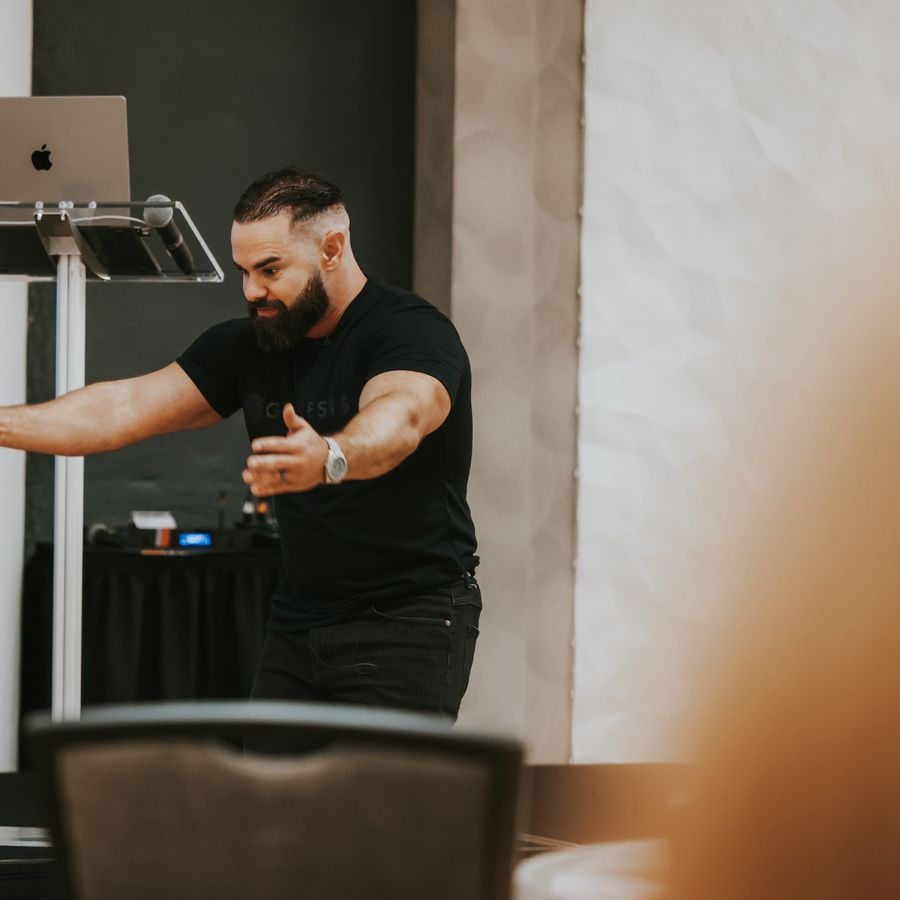
Co-presents this course. Co-founder and co-CEO of Genesis Lifestyle Medicine and host of the Medical Empires podcast.

Co-founder of Spinoso Medical Empires and Dr. Alex’s business partner.
Kara McClanahan, MBA, MHA, CMPE
Chad Steinorth, CPA
Pamela Mehta, MD, with Dr. Spinoso, Kara McClanahan and Vaughn Kohler
Shafqat Abbas, PharmD
All have nothing to disclose.
$229
Bring your KPIs and comp plan to a one-on-one call and pressure-test them for your own clinic.
Three: a base plus production bonus with flat tiers, a tiered commission by service category, and a team production bonus layered on individual KPIs. It also covers setting a production threshold of 2.5 to 5 times a provider’s fully loaded cost before bonuses unlock, and adding a tenure-based retention bonus.
Revenue per visit by role, patient retention tracked per provider, and rebooking rate. The course shares one practice’s benchmarks as a starting floor, such as an 85% schedule fill rate, 65% retention and a 75 to 80% rebooking rate, and shows how to set a floor, target and stretch from your own top performer.
Yes. It covers recruiting nationally, hiring new grads and budgeting for a ramp of roughly 10 to 20% of a full load at the start, non-solicitation versus non-compete agreements, training-cost recoupment agreements and training a new provider from documented SOPs.
No. It’s education. Contracts, non-solicitation agreements and training-cost recoupment agreements need review by an employment attorney in your state, and some states restrict commission structures.
2.25 credits through Pinnacle Conference, LLC, jointly accredited by ACCME, ACPE and ANCC: up to 2.25 AMA PRA Category 1 Credits™, 2.25 ANCC contact hours, 2.25 AAPA Category 1 CME credits and 2.25 IPCE credits. Nurse practitioners can apply for AMA PRA Category 1 Credits™ through AANP or their state boards.
The course is self-paced and runs 2 hours and 2 minutes. Credit can be claimed through November 3, 2029, after you complete the recording and the post-activity evaluation.
No. Courses are sold separately from Elite and Empire memberships.
2.25 accredited credits, 2 hours, $229.