
Opening a medical spa is one of the better moves in healthcare right now, if you do it in the right order. The people who fail usually did the steps backward. They bought the machine, then went looking for patients.
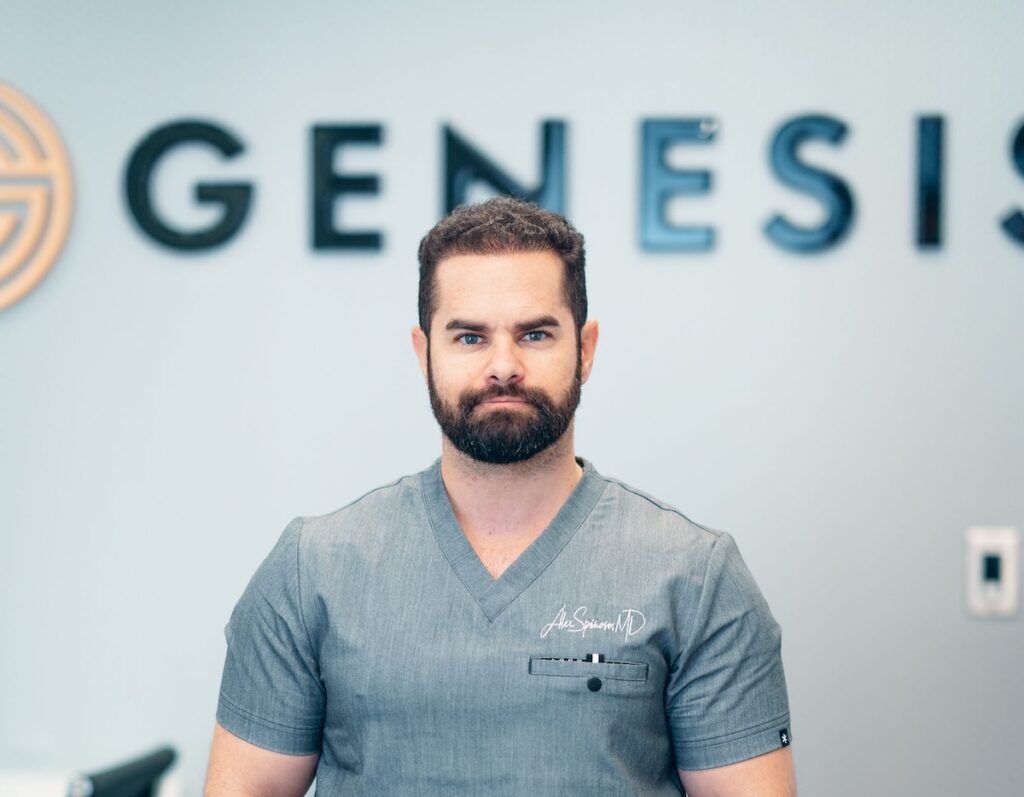
This is the order I would do it in. I launched Genesis Lifestyle Medicine in 2019 and we now run multiple medical clinics, so this step by step guide is what I would tell you over lunch, not what a consultant would sell you.
The short version
Starting a new med spa business takes ten things in sequence: market research, a legally compliant ownership and medical director structure, a tight service menu, a business plan, funding, buildout and equipment, the team, the tech stack, marketing, and systems.
The fastest path to profit is starting lean. Injectables, medical weight loss, and iv therapy first. Many med spas begin with fewer services to manage costs effectively, and that instinct is correct.
Regulations in the med spa industry are state-specific. Medical spas are legally considered medical practices in most states, and a physician or designated medical director must own or oversee the practice. Renting an MD license is a fast way to get shut down.
Creating a detailed business plan is crucial for med spa success. Download our free 10-Step Operator Checklist PDF and use it as your launch plan and your investor packet outline.
What a med spa is, and where the industry sits in 2026
A med spa is a hybrid between a cosmetic clinic and a spa. Injectables, laser hair removal, skin resurfacing, body contouring, iv hydration, hormone optimization, and other cash-pay medical treatments in one place.
It is not a day spa running massage therapy and facials, and not a plastic surgery practice, because plastic surgeons run OR cases with insurance attached. Unlike other medical practices, a med spa is cash-based, and that changes how you finance it.
The numbers
The global med spa market was valued at $16.5 billion in 2023. The U.S. medical spa industry has crossed $18 billion a year, growing at 8 to 12 percent. There were 8,841 medical spas in the U.S. in 2022. Today there are over 11,000.
The med spa industry employs over 70,000 people in the U.S., and most med spas generate approximately $120,000 in monthly revenue once established. Profit margins for established med spas typically range from 15 to 25 percent, and good operators clear 30.
What is driving demand, and what is pushing back
Consumer demand comes from social media platforms setting the standard, from everybody staring at their own face on video calls, from aging millennials wanting preventative treatments, and from real interest in metabolic health.
The pressure comes from the other side. More competition, private equity buying the good clinics, price compression on anything commoditized, and state medical boards that regulate medical spas enforcing harder. The clinics winning anyway pick a niche, build memberships, and sell wellness alongside medical aesthetics.
Step 1: Decide what you are actually building
Every profitable med spa starts with knowing who you serve and how you make money in years one through three. Pick one business model and commit. Injectable boutique, full-service wellness clinic, men’s performance hub, or weight loss plus aesthetics.
Then get specific on the target market. Women 30 to 55 over $100k household income coming in for Botox, hair removal, and medical weight loss. Men 35 to 60 wanting testosterone and body contouring. Med spas often offer injectables like Botox and dermal fillers as the core pillar, then add popular services like chemical peels, hormone therapy, and retail skincare.
Decide now if you are building one flagship or a multi-location brand with an exit at the end. That answer changes your name, your lease terms, and how you write your first SOP.
Step 2: Do the market research before you sign anything
Market research separates the profitable clinics from the ones that quietly close inside 24 to 36 months. We never open a location without it.
Pull a five to seven mile radius. List every competing med spa, every plastic surgery office with a med spa arm, and every wellness clinic offering injectables or iv therapy. Look at menus, pricing, reviews, social content, memberships. The gap is usually that nobody does both aesthetics and metabolic health.
Talk to your vendors too. Your reps want you to win, because if you grow they grow. They walk into every clinic in your market and will hand you that information for free. All you have to do is ask.
What a good site looks like
Affluent, growing, moderate local demand for something like “Botox plus your city,” and room to be different. My shortcut is simple. Look for the Sprouts or the Whole Foods. Look for the Lifetime Fitness. Somebody with a real estate department already spent a fortune working out where your patient lives. Go stand next to them.
Choosing a location is critical for attracting clients, because patients prefer convenient locations for smaller cosmetic services. Nobody drives 40 minutes for a 20-minute tox appointment. High visibility and accessibility boost foot traffic. Take ground-floor space, 1,500 to 3,000 square feet, with three to six treatment rooms and a consult area.
Now the lease. Negotiate the tenant improvement allowance, get five to ten year terms with options, and get exclusivity on medical spa services in your building. Anything under three to five years is not worth building into.
Here is where this bites. We signed a TI of $150,000 to build out a 1,300 square foot office. It cost $300,000, and guess what, that extra $150,000 was on us. Get a real construction number before you sign, not the landlord’s. I have also seen landlords write in that they get 20 percent of the profits. If they let you skip the personal guarantee, take it. I am not a real estate expert. I know enough to be dangerous.
Step 3: Legal structure, ownership, and your medical director
Med spas are medical practices in the eyes of regulators. Compliance will shut you down faster than a bad marketing month will.
State laws on ownership and treatment procedures vary significantly. In roughly 33 states, corporate practice of medicine laws restrict med spa ownership to licensed physicians or physician-owned entities. Non physicians typically need a management services organization. Management Services Organizations can help structure med spa operations legally in certain states, but the clinical entity stays physician-controlled.
Many states require a licensed physician to act as medical director, and that person has to be directly involved. Supervising injectables, laser treatments, iv therapy protocols, chart reviews, complications. Physicians can own medical spas in most states. Only licensed MDs, DOs, NPs, or PAs can diagnose, and NPs or PAs may need a collaborating physician.
The compliance list you cannot skip
Engage a healthcare attorney with actual med spa experience and budget $5,000 to $15,000 for entity setup, compliance policies, and consent forms. Pick the right specialist. There is a total difference between a general business attorney and someone who does healthcare regulatory work, and consulting one is essential to ensure compliance.
Acquire professional liability and general liability insurance before you see a patient. Implement hipaa compliance policies and OSHA infection control protocols, and get medical board registration and CLIA waivers if your state requires them.
Build a compliance calendar for annual ongoing training, equipment maintenance logs, laser safety certifications, and policy reviews. Regulatory requirements vary significantly by state, and securing a compliant location with proper facilities is a day-one item. I am not your attorney. Hire one for your state.
Step 4: Build the smallest service menu that works
Your opening menu decides your startup costs, staffing, and how fast you hit break-even. Medical spas make money on a few core services, not a long price list.
Phase 1: the starter menu
Neurotoxin, hyaluronic acid fillers, chemical peels, microneedling, medical-grade facials, iv therapy, B12 injections. Popular treatments include chemical peels, facials, and laser treatments, but start with whatever needs the least capital.
Injectables carry 60 to 70 percent gross margin and bring people back every three months without you doing anything. That is your foundation. Medical weight loss goes in day one if you have oversight. GLP-1s, plus contrave, phentermine, topiramate, metformin, because different patients need different tools.
Phase 2: what to add once you have volume
Laser hair removal, IPL, CO2 resurfacing, RF microneedling, body contouring, tattoo removal. High quality equipment here runs $80,000 to $200,000 per unit. Judge every addition on local demand, price per session, utilization, and payback period, which lands around seven to eight months if the volume is there. If it is not, the payback period is never.
The advantage we run is pairing aesthetics with lifestyle medicine. Injectables plus weight management, hormones, and regenerative medicine on one patient. Same acquisition cost, three times the lifetime value.
Step 5: Write a business plan that tests your assumptions
A business plan for your own business is not a school essay. It is how you find out if the thing works before you spend the money.
Include the executive summary, market analysis, ownership structure, services and pricing, marketing strategy, staffing plan, and risk analysis. Financial planning needs revenue modeling and break-even analysis across best, expected, and worst case.
What it costs to open in 2026
| Cost category | Lean build, 3-4 rooms | Full-service build |
| Total startup costs | $250,000-$400,000 | $600,000-$1,000,000+ |
| New equipment and devices | $10,000-$30,000 | $100,000-$200,000+ |
| Monthly marketing | $3,000-$5,000 | $5,000-$10,000+ |
| Monthly rent | $3,000-$8,000 | $8,000-$15,000+ |
Startup costs for medical spas typically range from $100,000 to $500,000 depending on scope, and full-service builds can reach $1 million.
It does not have to be a $300,000 build. People hang $10,000 sconces and a lit sign that costs $20,000 before they have a patient. Our signage on one clinic was under $100. Flooring was five or six thousand. We have opened rooms for about $20,000 each. The expenses owners forget are software, processing fees, benefits, continuing education, and device maintenance. None are big. All are monthly.
We run EOS-style planning, rocks for the 90-day priorities and a scorecard for the weekly numbers. Traction by Gino Wickman is an eight dollar book and it will do more for your first year than most consultants.
Step 6: Funding and cash reserves
Funding comes from SBA loans, bank loans, physician-only lending programs, private investors, or your own capital. Chase and Bank of America will go to two or three million on the right file.
My bias is bootstrapping. Brent and I did not take loans, because we did not want debt inside something unproven. Genesis runs zero debt today and that is why we still control it. Taking on an investor just because they want to give you money is a bad idea. Money with the wrong person attached is the most expensive money you will raise.
Hold reserves past the buildout. We keep $30,000 in the smaller clinics that just opened, $50,000 in the bigger ones, and $75,000 in the ones doing $250 to $300k a month. One month of payroll, marketing, cost of goods, and lease. Cover your nut, then grow.
Step 7: Buildout, equipment, and the tech stack
Architectural plans, permitting, construction, inspection. Budget four to nine months and expect it to run long. Look for second-generation space, because if somebody already put plumbing and rooms in, you inherit their budget.
On new equipment, look past the brand pitch. Clinical evidence, FDA clearance, total cost of ownership, disposables, and how much training the vendor partnerships include.
The second mistake I see entrepreneurs make is pouring money into machinery day one. Best lasers, newest CoolSculpting, newest Emsculpt Neo, before there is a single patient. Then there is nothing left to market with and the lease shows up anyway.
We did not buy our first really expensive machine, and really expensive to me was anything above $100,000 a unit, until 12 months after the first clinic opened and it had already hit seven figures. The device was a reward for revenue we already had. If you want one early, buy a cheap one that pays for itself. We run the Storz D-ACTOR 100, a $20,000 shockwave unit, $500 a month financed. Two patients covers it.
The minimum viable tech stack
Practice management and EMR built for med spas, covering scheduling, charting, and inventory in one place. Online booking with payment processing wired in, so nobody has to call you to pay you.
Membership and subscription billing, which is where recurring revenue lives. Before-and-after photo management. Marketing automation for email, SMS, and CRM. Telehealth if you run weight loss or hormone consults.
Step 8: Hire the right team and pay them properly
The biggest predictor of whether a clinic works is not the device list. It is who is in the building. Recruiting qualified medical professionals is critical, and hiring skilled staff is crucial for med spa success.
A med spa typically employs a medical director and licensed nurses. Beyond that, injectors, licensed professionals like aestheticians who enhance service offerings and drive product sales, a front desk coordinator, and part-time back office. Keep the right team small. We run five to eight employees per location, and that forces everybody to be good instead of hiding behind headcount.
Hire on technical skill and cultural fit, and do working interviews. What I see everywhere is people hiring somebody because they have a resume, they seem competent, they have two legs and a voice, and they said hi walking in. That is not a hiring process. And you do not find great managers. You steal them from other companies. Period. Pay them more, give them more upside, and they come.
How to pay people
Labor costs are a big portion of med spa overhead, so structure pay as base plus performance incentives tied to revenue, rebooking, and membership sales.
Nobody on my staff makes less than $50,000 a year, including the front desk. We run 42 different bonuses across the company, because a bonus tied to a specific behavior changes that behavior and a raise changes nothing.
One rule that took me too long to learn. You cannot delegate responsibility and hold somebody accountable without also delegating the authority to decide. Owners do this constantly, then wonder why good people leave. Continuous training and adherence to protocol are necessary, so invest in injectables training, laser safety, and complication management. See one, do one, teach one. Plan on a year before somebody is good.
Step 9: Build the marketing engine before you open
Effective marketing strategies are vital for attracting clients to med spas, and a strong online presence is essential. Build a repeatable engine, not campaigns.
The 60 to 90 day pre-launch list
Secure the brand name and domain, and build a conversion-focused website with online booking. Set up the Google Business Profile early, because establishing high-quality Google reviews early boosts med spa visibility more than anything else you get for free. Start publishing educational content before you have a door to open.
Run targeted Meta and Google ads on terms like “Botox plus your city.” About 80 percent of our ad spend sits on Google and Bing, and the reason is conversion. Facebook gives us 100 leads, five walk in, two or three buy. Google gives 20 or 30 leads, ten walk in, five or six buy.
If you run weight loss or anything prescription online, get LegitScript certified. About $2,500, three to six months, and 100,000 percent worth it, because without it your ad account is a coin flip. And do not be too proud for the cheap channels. We built $20 million a year in income off clinics that started on Groupon.
Grand opening with founding-member pricing works, and so do partnerships with nearby gyms and salons, local influencer agreements, and steady SEO. Marketing costs run $500 to $1,500 monthly on organic channels, and paid needs more.
Building a brand identity and online presence enhances visibility long-term, but retention is where the money is. Build it around a VIP client experience, memberships, and referral incentives. Referrals are the best marketing you have, because they are free.
What to measure every week
Cost per lead, cost per new patient, show rate, conversion rate, lifetime value. Five numbers, every week, on a scorecard somebody owns.
One more operational number. We double book about 20 percent of appointments, because that is roughly the no-show rate anyway. Worst case you handle 12 patients instead of 10.
Step 10: Write the SOPs while it is still small
SOPs are vital to scale. Skip them and you will not scale past a certain point. You might get two or three clinics, because the staff all work in the same building and teach each other. Beyond that it falls apart, and you lose money every time somebody leaves.
Are SOPs the same as checklists? Yes and no. You do not want everything to be a checklist, because then staff focus on ticking boxes instead of thinking. Write the process for what must happen the same way every time, for every room and every role, while you have four employees. Doing it later with 40 is a different project.
Same with core values. Say them in every meeting until you are sick of it, because the only person who gets tired of hearing your voice is you. Then enforce them. When somebody violates one, everybody watches what you do next. Handle it in front of the team and the room recalibrates. Culture is not the poster. It is what you tolerate.
Download the free 10-Step Med Spa Operator Checklist from Dr. Alex Spinoso’s site. It mirrors every step above and doubles as an investor packet outline.
FAQ: starting a med spa in 2026
These come up constantly from physicians, NPs, PAs, and entrepreneurs looking at opening a medical spa.
What does it realistically cost to open a med spa in 2026?
A lean three to four room injectable-focused clinic can open for $250,000 to $400,000 all in. A full-service medical spa with lasers, body contouring, and an iv therapy lounge runs $600,000 to $1,000,000 and up.
The buckets are construction, equipment, opening inventory, legal setup, software, pre-opening payroll, money for marketing, and three to six months of operating cash. Undercapitalization is the top reason new med spas struggle, and it is always the same two line items.
How long does it take for a new med spa to become profitable?
Most well-planned med spas hit operational break-even around 9 to 18 months, with target profitability between 18 and 36 months. Speed depends on how hard you marketed before opening, how crowded your market is, your pricing, and how lean you started. Careful planning and weekly KPI tracking shortens it more than anything.
Do I need to be a doctor to own a med spa?
It depends on your state. Some require majority physician ownership, some allow NP or PA ownership, and some let non physicians own a management company that contracts with a physician-owned entity.
Renting an MD license without real oversight is risky and often illegal. Talk to a healthcare attorney who knows your state, and read the guidance from the american med spa association and your state board.
Which med spa services are most profitable to start with?
Injectables at 60 to 70 percent gross margin, basic skin procedures with low consumable costs, and medically supervised weight loss. Anything needing a six-figure device comes after consistent patient flow. A med spa requires patience. Build demand, then buy the platform.
How do I build a med spa I can eventually sell?
Buyers and private equity want clean financials, diversified revenue, a real membership base, documented SOPs, and a brand that does not live or die on one personality. If the business is you, there is nothing to sell.
Think systems first from day one, which is why we run EOS and written operator playbooks. Scalable and sellable are the same project. Expect a controlling stake in the 60 to 80 percent range, with you staying on and a second bite later. For any business owner serious about an exit, eight years or more of disciplined operation sets the valuation. The groundwork in year one is what you get paid for in year eight.
*Dr. Alex Spinoso, MD, MBA is a Dartmouth educated, internationally trained physician and the Founder and CEO of Genesis Lifestyle Medicine.*