
An accredited course on tax planning for physicians, nurse practitioners and clinic owners. Choose the right entity, pay yourself a defensible wage, document every deduction and time your tax payments around your cash, all before December 31 sneaks up on you.
1.25 CME/CE credits · 1 h 13 min on demand · $129

As a single-member LLC, every dollar of net income carries roughly 15% self-employment tax. With an S corp election, only your W-2 wage does. The rest comes out as distributions, taxed once as ordinary income with no added payroll tax.
Move the sliders to see the gap. Then set the wage the way the course teaches: what you’d pay someone else to do your job at market rate.
Profit after expenses, for the year.
Market rate for the clinical hours you work, not a founder's salary.
$19,500
a year in payroll tax you don't pay on $130,000 of distributions.
$37,500
payroll tax as a single-member LLC, on all net income
$18,000
payroll tax as an S corp, on your wage only
Illustrative math at the course's ~15% teaching rate. It ignores wage-base caps and state taxes, and comes before the cost of a payroll service and an accountant. Review your own numbers with your CPA.
Taught by Dr. Alex Spinoso with CPA Chad Steinorth, from a live mastermind session with practice owners and an attorney on hand for questions. You’ll be able to:
Setting up provider pay too? Pair it with Make Your Providers Carry the Schedule.
Every entity answers two questions differently: how the income is taxed, and how you get paid. Most states also require a licensed practice to form as a PLLC, not a standard LLC, so confirm yours is set up correctly.
Entity
How income is taxed, and who it fits
Single-member LLC or PLLC
All net income flows to your personal return and carries roughly 15% self-employment tax. Fits very new or very small practices.
Partnership
Each owner’s share flows through on a K-1, still subject to self-employment tax. Fits multi-owner practices that haven’t elected S corp status.
S corp election
Payroll tax applies only to your W-2 wage; distributions are taxed once. Fits most established, profitable practices.
C corp
The corporation pays tax, then owners pay again on dividends. Rarely a fit at practice scale; the course puts it around $50M or more in revenue.
Figures are the teaching rules of thumb from the course. Tax law and rates change, so verify current thresholds with your CPA.
Mar 15
File Form 2553 between January 1 and March 15 for an existing entity. A late election needs a documented reason.
$60–100K
Around this much annual net income, the payroll tax savings typically outweigh the added compliance cost.
0%
Licensed medical practices are a specified service trade or business, so the 20% QBI deduction doesn’t apply.
A CPA rarely says you can’t deduct something. They say whether they’d defend it. The answer almost always comes down to a genuine business purpose, recorded at the time, not reconstructed at tax time.
Keep a receipt for anything over $75. A phone photo filed the same week counts.
Note who was there, their company and role, and what you discussed. “We talked business” doesn’t hold up.
Commuting to a single location is never deductible. Driving between locations or to referral sources can be.
Keep a mileage log and have the business reimburse you. Wrapping your car in ads is not a confirmed deduction.
Only the business portion of a trip is deductible, documented by day and purpose.
Self-paid health insurance is 100% deductible, whatever an older rule of thumb says.
A formal monthly lease between your business and you as the homeowner, priced like a local executive office. It lands on Schedule E as rental income, with a share of utilities and repairs deducted against it.
Under Section 280A(g), rent your home to your business for up to 14 days a year at a comparable rate, for real meetings or events. It’s deductible to the business and tax-free to you.
There’s no blanket rule for quarterly payments or for paying cash for equipment. Both come down to what your money would otherwise earn inside the practice.
Work the real math with your CPA each quarter, based on your actual cash position, instead of defaulting to “always” or “never”.
One deadline isn’t December 31: you can generally fund a 401(k) or SEP IRA for the prior year up to your extended filing date. Cash balance plans allow bigger contributions but usually commit you to about three years of funding, so ask before you sign.
Cash-flush
Pay estimated taxes accurately. Underpayment interest, around 12% in the course, is a pure cost when the cash would sit idle.
Reinvesting at a high return
A smaller underpayment penalty can cost less than pulling growth capital that’s earning 30 to 40% inside the practice.
Financing equipment
Finance when your realistic return on the freed-up cash beats the interest rate. With no better use for the cash, pay for it outright.
A strong team reduces risk but doesn’t remove the need for oversight. Embezzlement by trusted staff, accountants and even family members is a documented risk in this industry.
When
What to put in place
Before your next hire
A dedicated bookkeeper who keeps the books clean all year, reviewed by you every month.
Larger transactions
Dual signatures, so no one person controls significant outflows.
Every year or two
An internal audit of finances and operations, separate from the tax-time review.
As revenue grows
Reassess your CPA. Are they bringing you strategy, or only processing what’s already decided?
Periodically
Shop your payroll and payment processor pricing against the current market.
Before a sale
Clean, documented history. Buyers add back documented spending, and due diligence reviews every year of records, not just the last 12 months.
Education, not tax advice. The course is general educational information, not legal, accounting, investment or tax advice. Two questions raised in the session were left open: whether recent tax law changes make a C corp more attractive ahead of a sale, and whether a vehicle wrap makes a car fully deductible. Confirm both, and anything you act on, with your own CPA, attorney and financial planner.
Keep More at Tax Time is accredited through a jointly accredited provider as “Practice Structure and Tax Compliance for Clinic Owners”. Pick your license to see what you receive.
1.25 AMA PRA Category 1 Credits™
Pinnacle Conference, LLC designates this enduring material for a maximum of 1.25 AMA PRA Category 1 Credits™.
Physicians should claim only the credit commensurate with the extent of their participation in the activity.
AMA PRA Category 1 or 1.25 ANCC contact hours
Nurse practitioners can apply for AMA PRA Category 1 Credits™ through the American Academy of Nurse Practitioners (AANP). AANP will accept AMA PRA Category 1 Credit™ from Jointly Accredited Organizations.
Nurse practitioners can also apply for credit through their state boards.
1.25 AAPA Category 1 CME credits
Pinnacle Conference, LLC has been authorized by the American Academy of Physician Associates (AAPA) to award AAPA Category 1 CME credit for activities planned in accordance with AAPA CME Criteria.
PAs should only claim credit commensurate with the extent of their participation.
1.25 ANCC contact hours
This activity is designated for 1.25 contact hours.
Participation certificate
All other attendees receive a participation certificate for the credit type their licensing body accepts.
The activity also awards 1.25 Interprofessional Continuing Education (IPCE) credits.
In support of improving patient care, this activity has been planned and implemented by Charismedx LLC DBA Spinoso Medical Empires and Pinnacle Conference, LLC. Pinnacle Conference, LLC is jointly accredited by the Accreditation Council for Continuing Medical Education (ACCME), the Accreditation Council for Pharmacy Education (ACPE), and the American Nurses Credentialing Center (ANCC), to provide continuing education for the healthcare team.
This activity was planned by and for the healthcare team, and learners will receive 1.25 Interprofessional Continuing Education (IPCE) credits for learning and change.
See our accreditation page for every credit type and how to claim. Credit can be claimed through November 3, 2029.
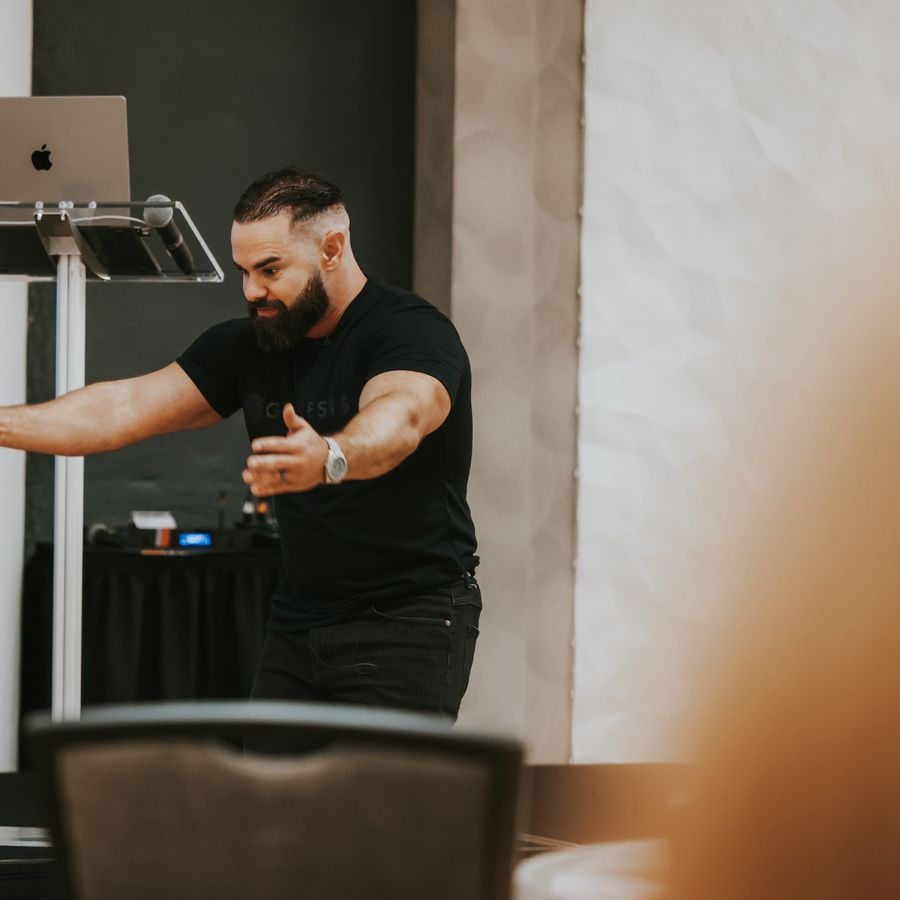
Co-founder and co-CEO of Genesis Lifestyle Medicine and host of the Medical Empires podcast.

Co-founder of Spinoso Medical Empires and Dr. Alex’s business partner.
Chad Steinorth, CPA
Kara McClanahan, MBA, MHA, CMPE
Pamela Mehta, MD, with Dr. Spinoso, Kara McClanahan and Vaughn Kohler
Shafqat Abbas, PharmD
All have nothing to disclose.
$129
Bring your numbers to a one-on-one call and pressure-test your next move for your own clinic.
Often, once it’s profitable. The course’s rule of thumb is that around $60,000 to $100,000 or more in annual net income, the payroll tax savings typically outweigh the cost of a payroll service and stricter compliance. Many practices elect from their first year. Your CPA should confirm the numbers for your situation.
Most states enforce corporate practice of medicine rules that require a licensed practice to form as a PLLC rather than a standard LLC. Some older practices are grandfathered in, but don’t assume yours is. An S corp is a tax election you can make on either.
Pay yourself what you’d pay someone else to do your specific job at market rate, such as a nurse practitioner working your clinical hours. If your current wage is too high, the course recommends lowering it gradually over several years rather than all at once, to avoid an audit flag.
No. It’s education. Nothing in the course replaces your own CPA, attorney and financial planner reviewing your situation, and tax law and rates change.
1.25 credits through Pinnacle Conference, LLC, jointly accredited by ACCME, ACPE and ANCC: up to 1.25 AMA PRA Category 1 Credits™, 1.25 ANCC contact hours, 1.25 AAPA Category 1 CME credits and 1.25 IPCE credits. Nurse practitioners can apply for AMA PRA Category 1 Credits™ through AANP or their state boards.
The course is self-paced and runs 1 hour and 13 minutes. Credit can be claimed through November 3, 2029, after you complete the recording and the post-activity evaluation.
No. Courses are sold separately from Elite and Empire memberships.
1.25 accredited credits, 73 minutes, $129.